
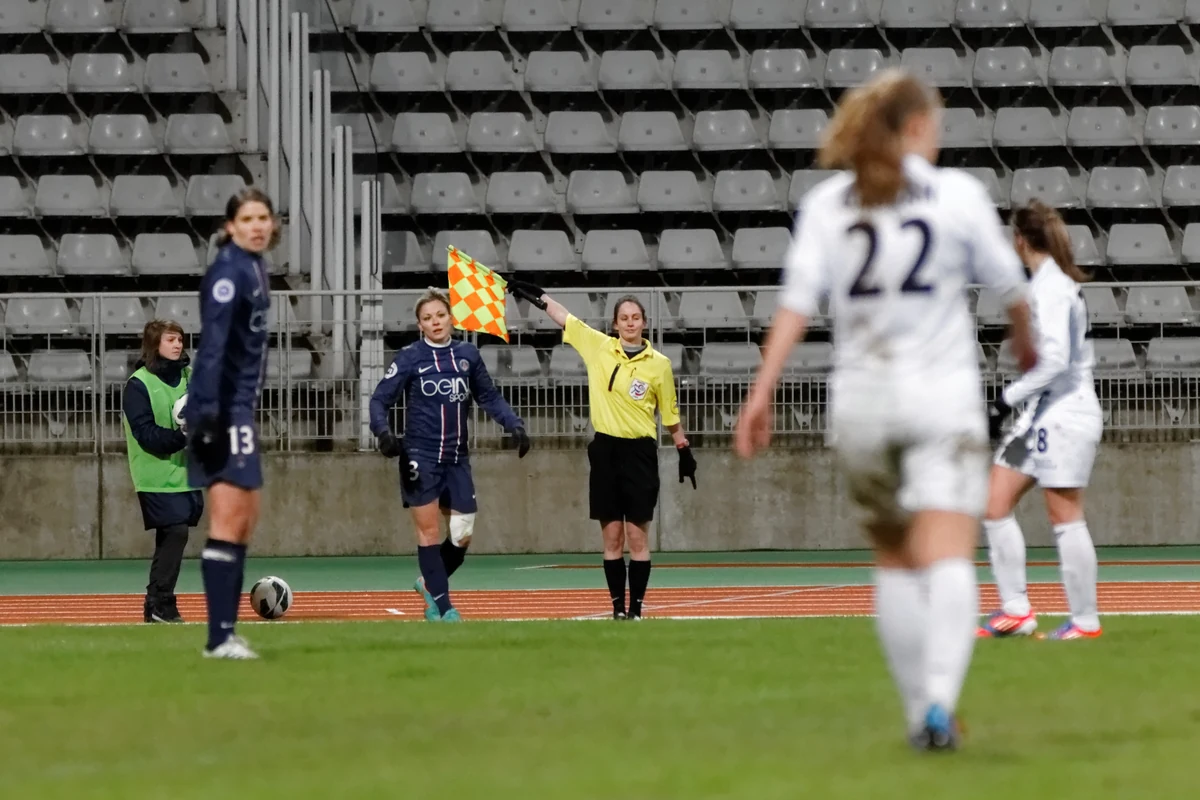

A forward runs clear, the net moves and the celebration stops. To understand an offside decision, separate two questions: where was the attacker when a team-mate played the ball, and what did the attacker then do?
That distinction is the most useful starting point for watching a replay. A still image can help show position; it cannot explain the whole incident on its own.
What to look for first
- Identify the relevant touch by the attacker’s team-mate.
- Compare the attacker with both the ball and the second-last opponent.
- Watch whether the attacker becomes involved in play.
How offside position works
Under IFAB Law 11, an attacker is in an offside position when a playable part of their head, body or feet is in the opponents’ half and nearer the goal line than both the ball and the second-last opponent. Hands and arms do not count. Being level with the second-last opponent is onside.
Position alone is not an offence. Involvement can include touching a team-mate’s ball, challenging an opponent or clearly obstructing an opponent’s view. The timing normally uses the team-mate’s first contact with the ball; a goalkeeper’s throw uses release.
A better way to watch the replay
Imagine a winger and a striker breaking into space. Before following the striker’s run, watch the winger’s boot. Freeze the sequence at the relevant contact, then find the ball and the second-last opponent. Now replay the action to see the striker’s involvement.
This viewing routine avoids a common mistake: judging the attacker only when the pass arrives. It also makes you less dependent on a camera angle that follows the ball and loses the defensive line.
Why a touch by a defender needs context
A rebound or deflection does not automatically remove an offside offence. IFAB distinguishes a controlled, deliberate play by an opponent from a deflection, and treats a deliberate save differently. There is no offside offence when receiving directly from a throw-in, goal kick or corner.
For a disputed clip, slow down before announcing a verdict. Ask what the defender could control and whether the sequence includes another touch. A cropped social video can leave out precisely the action that matters.
Follow the decision as well as the score
When using our live football centre, check whether a goal remains provisional during a review. A quick score notification is useful for following the match; the referee’s final decision explains what belongs in the result.
The practical habit is simple: identify the touch, inspect the position, then watch the involvement. You will understand far more than a freeze-frame argument allows.
Official source
IFAB Law 11: Offside. Rules checked on 6 novembre 2026; consult the edition used by the competition.