
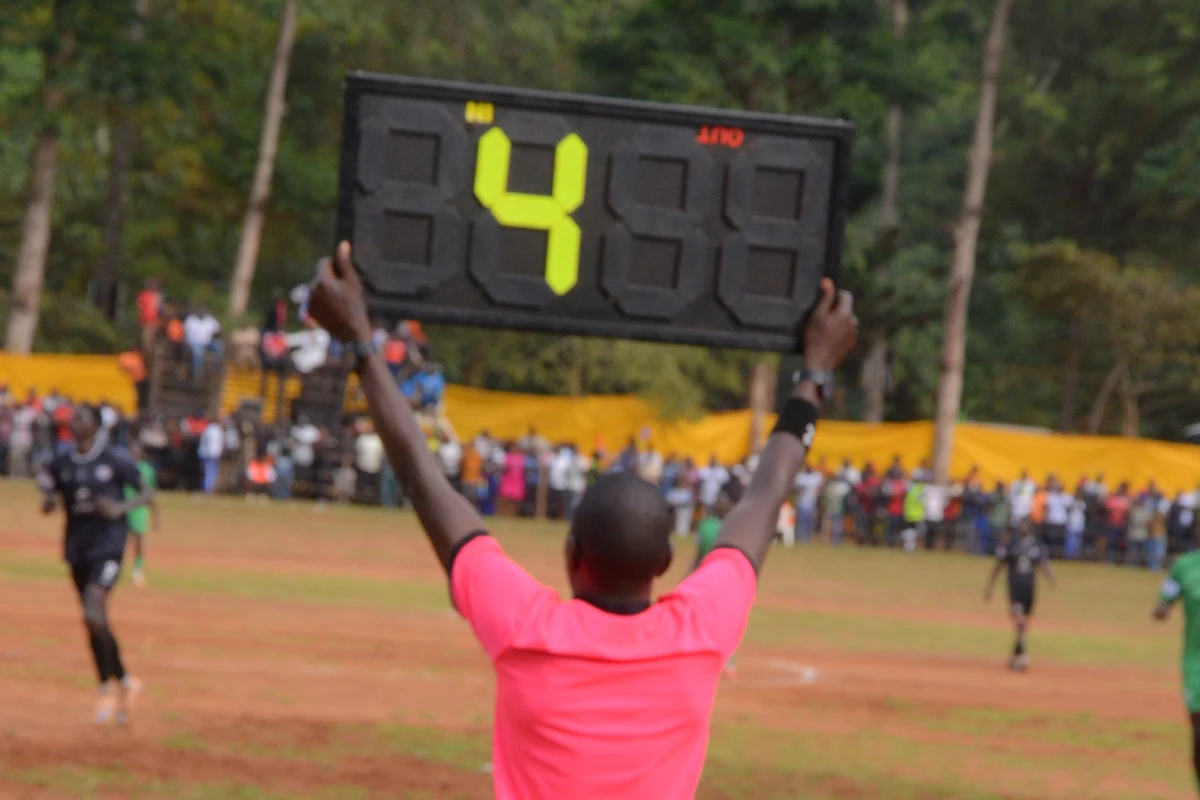

The clock reaches ninety, the board shows six and the match still has not finished at ninety-six. That can be perfectly consistent with football’s timing rules. The board gives a minimum allowance, not a guaranteed finishing second.
The first thing to establish is which kind of time you are watching. Stoppage time and extra time solve different problems, even when both extend the afternoon.
What stoppage time is for
IFAB Law 7 provides for time lost during each half to be allowed by the referee. Reasons include substitutions, injury assessment, time-wasting, disciplinary action, medical breaks, VAR delays and celebrations. The fourth official indicates the minimum additional time decided by the referee. That allowance can increase, but cannot decrease.
A normal match consists of two forty-five-minute halves, subject to the permitted arrangements in the Laws and competition rules. Added time belongs to the half in which it is played.
Why the board is not a countdown
Imagine six minutes are indicated and then a player needs treatment during that period. Expecting the whistle at precisely ninety-six would ignore the further interruption.
As a viewer, watch what happens after the board appears. It is easy to remember the number and forget the stoppages that follow it. A clock tells you how much time has passed; it does not show every decision behind the allowance.
What extra time means
Extra time is a separate procedure that competition rules can use to decide a drawn match or tie. IFAB Law 10 permits two equal periods of no more than fifteen minutes each. Do not assume every cup match uses it: the competition determines its method for producing a winner.
For supporters following several competitions, this is a useful pre-match check. Read the format before the game reaches a draw, rather than applying the rules of the last tournament you watched.
Read the labels carefully
In a match centre, check both the score and the status. A minute label by itself may be less informative than the stage beside it. If a feed is slow to change from regulation time to extra time, verify the sequence with the official match coverage.
Likewise, a result captured before the final whistle is a snapshot. It is not evidence that the referee ended the game at that moment.
A simple checklist for the closing minutes
Ask three questions: is this additional time within a half, has the competition moved into extra time, and has the match actually ended? Those checks help you interpret an update without guessing from the clock alone.
Use the live match centre while the game is in progress and the results page for completed matches. For a disputed timing detail, consult the official competition report.
Official sources
Checked on 6 novembre 2026.